The Complete History of Dollhouses: From Ancient Egypt to Modern Miniatures
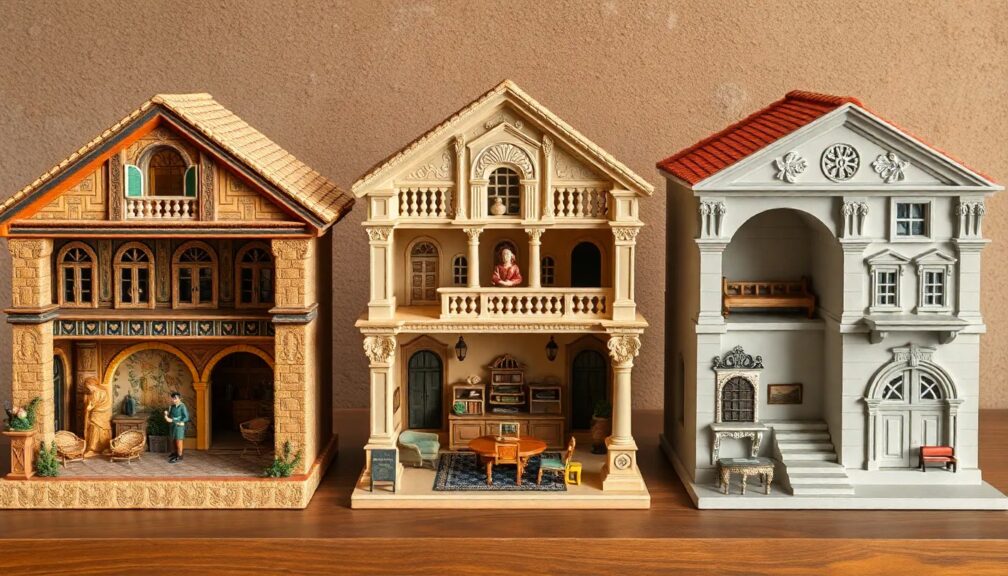
The history of dollhouses is a captivating 4,000-year journey that transforms tiny architectural models into cultural treasures. From ancient Egyptian tombs to Victorian parlors and modern collector showcases, these miniature homes reveal fascinating insights into how societies lived, what they valued, and how childhood has evolved across civilizations.
Understanding dollhouse history means exploring more than just toys. These intricate creations served as status symbols for wealthy merchants, educational tools for young women learning household management, and artistic masterpieces showcasing the finest craftsmanship of their eras. Today, antique dollhouses command prices reaching millions of dollars at auction, while museums worldwide preserve these miniature time capsules for future generations.
This comprehensive guide traces the complete origins of dollhouses from ancient civilizations through the Renaissance, Victorian golden age, and into the 21st century. You'll discover when dollhouses were invented, how famous pieces and collections shaped design history, and why these miniature worlds continue captivating enthusiasts of all ages.
When Were Dollhouses Invented? Understanding the Origins
When were dollhouses invented? The answer depends on how you define "dollhouse." Miniature houses appeared in ancient Egypt around 3000 BCE as sacred burial objects, but the dollhouse as we recognize it today—elaborate miniature homes for display and education—emerged in 16th-century Germany and the Netherlands.
The true origins of dollhouses began around 1550-1600 when wealthy European merchants commissioned ornate "baby houses" (Nuremberg) or "cabinet houses" (Netherlands). These weren't children's toys but sophisticated art pieces designed to showcase family wealth, document possessions, and teach daughters about managing grand households. The oldest surviving example, the Nuremberg Dollhouse from 1558, resides in Germany's Germanic National Museum.
The dollhouse history from this Renaissance period reveals that these early creations cost as much as actual homes. Petronella Oortman's famous Dutch cabinet house (1686-1710) required the same investment as purchasing an Amsterdam canal house, featuring over 700 hand-crafted miniature objects including real paintings, silverware, and porcelain dishes.
Ancient Origins of Dollhouses (3000 BCE - 1500s)
Ancient Egypt: The First Miniature Houses
The earliest origins of dollhouses can be traced to ancient Egypt around 3000-2000 BCE. Archaeological discoveries reveal that Egyptians placed miniature houses, furniture, and servants in tombs to accompany the deceased into the afterlife. These weren't toys but sacred objects representing the home the person would inhabit in eternity.
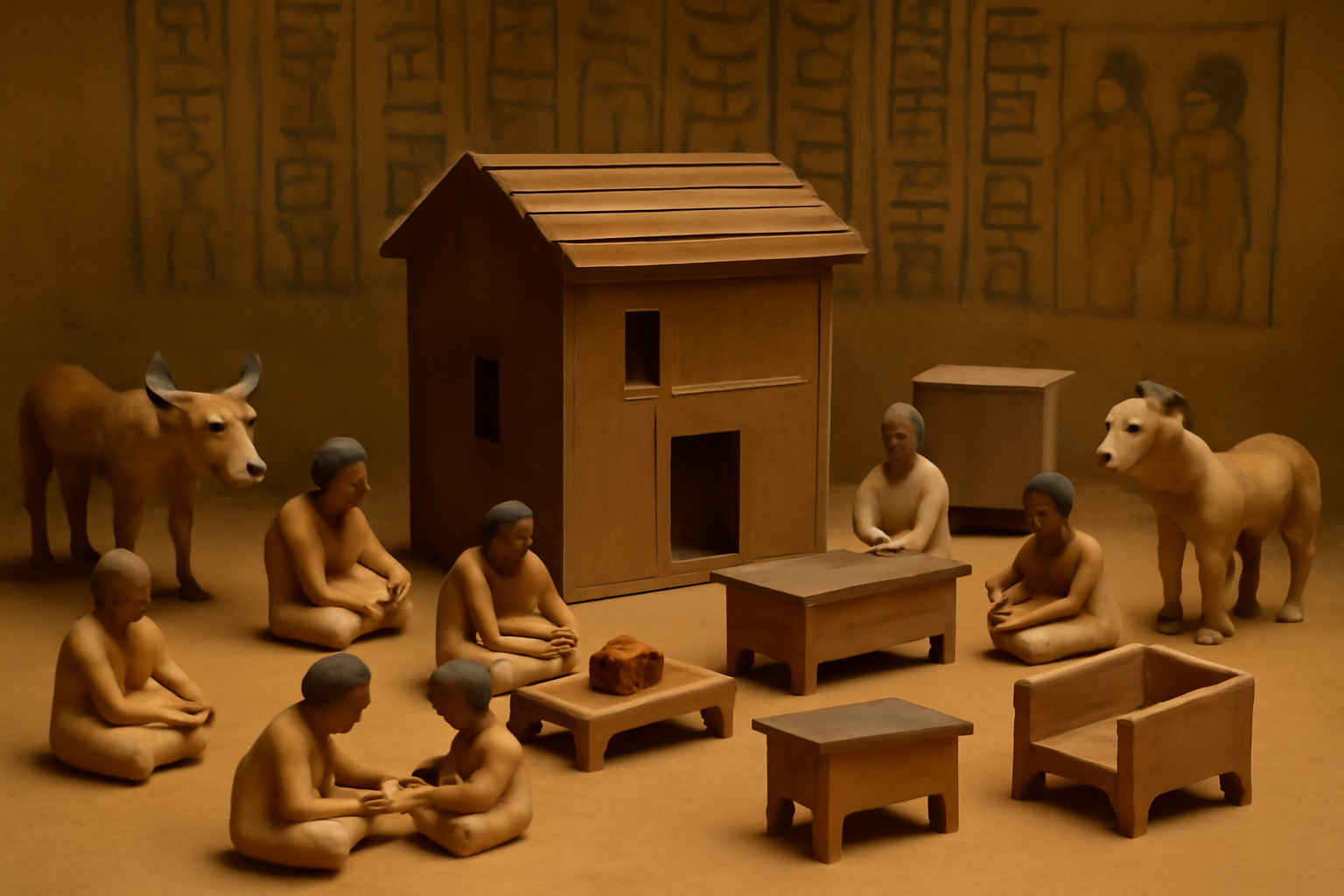
These ancient miniatures were crafted from wood, clay, and stone, featuring detailed replicas of servants preparing food, miniature furniture and household items, architectural details of Egyptian homes, and boats and animals. The history of doll miniatures during this period demonstrates humanity's long-standing fascination with recreating life in miniature form.
Roman and Greek Miniatures
Ancient Romans and Greeks also created miniature houses and furniture, though these served different purposes as educational tools for teaching children about household responsibilities, votive offerings placed in temples, and decorative objects for wealthy households. The history of doll houses during this period shows that miniatures held both practical and spiritual significance across ancient civilizations.
Medieval Period (500-1500 CE)
During the medieval period, miniature houses were rare. Most documented examples come from church collections featuring nativity scenes, monastery workshops creating religious dioramas, and royal collections in European courts. The history of dollhouses during medieval times was limited to religious and aristocratic circles, setting the stage for the Renaissance explosion of miniature craftsmanship.
European Dollhouse Renaissance (1600s-1700s)
The Birth of "Baby Houses" in Northern Europe
The true origins of dollhouses as we know them began in 16th and 17th century Germany and the Netherlands. Wealthy merchants commissioned elaborate "dockenhaus" (Germany) or "poppenhuizen" (Netherlands), not as children's toys, but as status symbols displaying family wealth, educational tools teaching daughters household management, and art objects showcasing craftsmanship and taste.
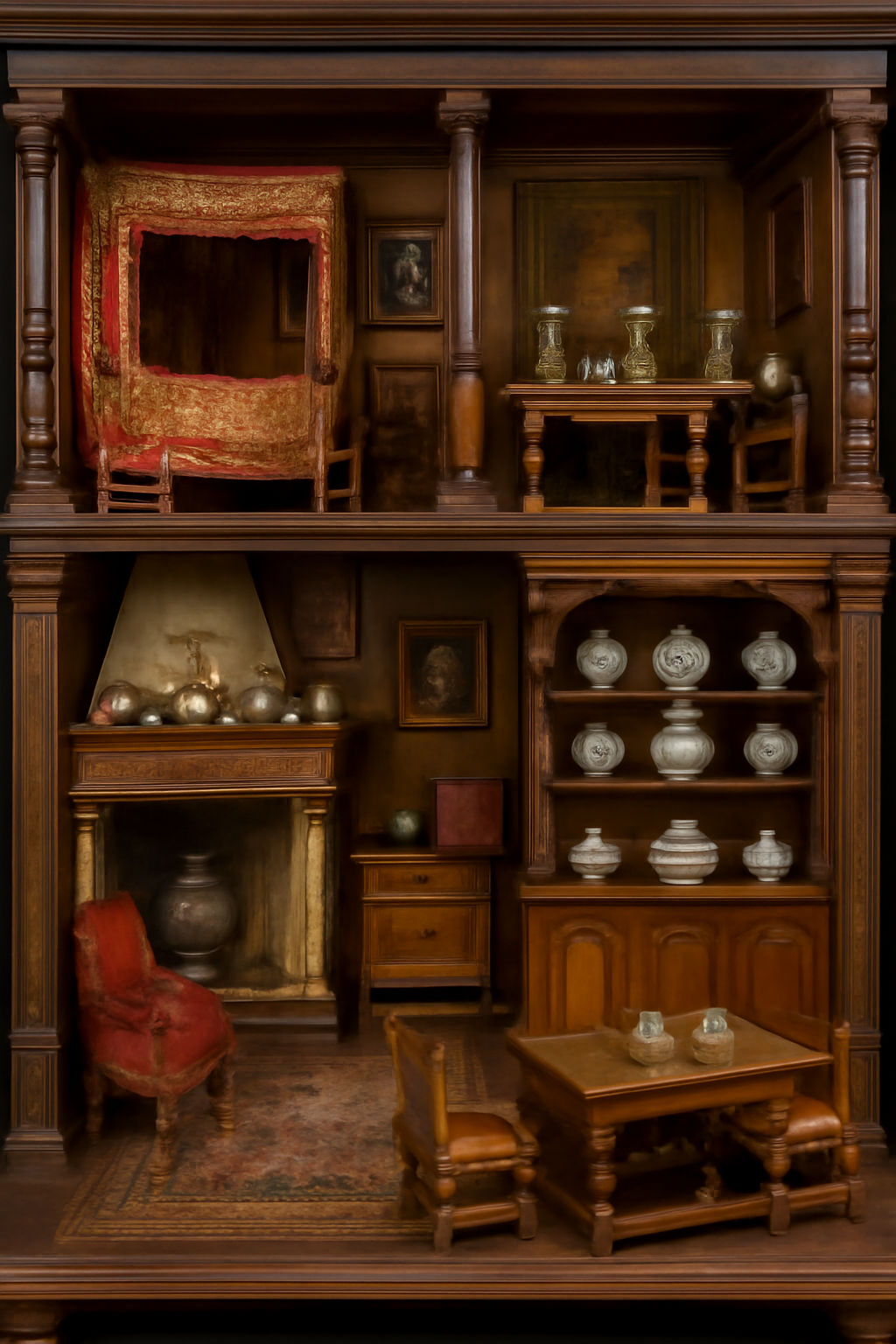
These early dollhouses featured hand-carved wooden cabinets opening to reveal multiple rooms, silver and gold miniature pieces and collections, detailed textiles including curtains, carpets, and bedding, and porcelain and ceramic miniature dishes. The craftsmanship invested in these pieces rivaled that of full-sized furniture and decorative arts.
The Nuremberg Tradition
Nuremberg, Germany became the epicenter of dollhouse manufacturing in the 1600s. The city's toy makers created intricate furniture sets, tin and pewter miniature kitchenware, detailed architectural elements, and complete room settings. These craftsmen established traditions that influenced dollhouse manufacturing worldwide, with Nuremberg houses from this era remaining some of the most prized pieces in museum collections.
Dutch Cabinet Houses
Dutch cabinet houses (poppenhuizen) of the 1600s-1700s represented the pinnacle of dollhouse artistry. Notable examples include Petronella Oortman's Cabinet House (1686-1710), which cost as much as an actual Amsterdam canal house, featuring over 700 miniature objects including real paintings, silverware, and porcelain.
Sara Rothé's dollhouse (1743) showcased nine rooms across three floors with working drawers, opening doors, and authentic period furnishings. These weren't toys but museum-quality art pieces and collections that documented upper-class Dutch life in exquisite detail. The history of dollhouses in the Netherlands demonstrates how these miniatures served as cultural artifacts preserving lifestyle and design aesthetics for future generations.
English Baby Houses
By the late 1600s, dollhouse fashion spread to England where aristocratic families commissioned their own "baby houses." These English versions often featured Georgian architectural styles with symmetrical facades, sash windows, and classical proportions. The origins of dollhouses in England show strong influence from Dutch and German traditions, adapted to British tastes and architectural styles.
The Victorian Era & Golden Age of Dollhouses (1800s)
The Industrial Revolution Transforms Dollhouse Manufacturing
The 19th century marked the true golden age in the history of dollhouses. The Industrial Revolution brought mass production techniques that made dollhouses accessible beyond the wealthy elite. German toy manufacturers, particularly those in Nuremberg and the Thuringia region, led this transformation with innovations in manufacturing processes, standardized miniature furniture production, lithographed paper decorations on wood, and affordable materials like tin and cardboard.
Victorian Dollhouses: The Classic Design
Victorian dollhouses became the defining style of the 1800s, characterized by elaborate Gothic and Queen Anne architectural details, multiple stories (typically 2-4 floors), detailed wallpapers and floor coverings, miniature gas lighting fixtures, and servants' quarters and nurseries. These classic and modern (for their time) designs reflected the social structure and domestic ideals of Victorian society.
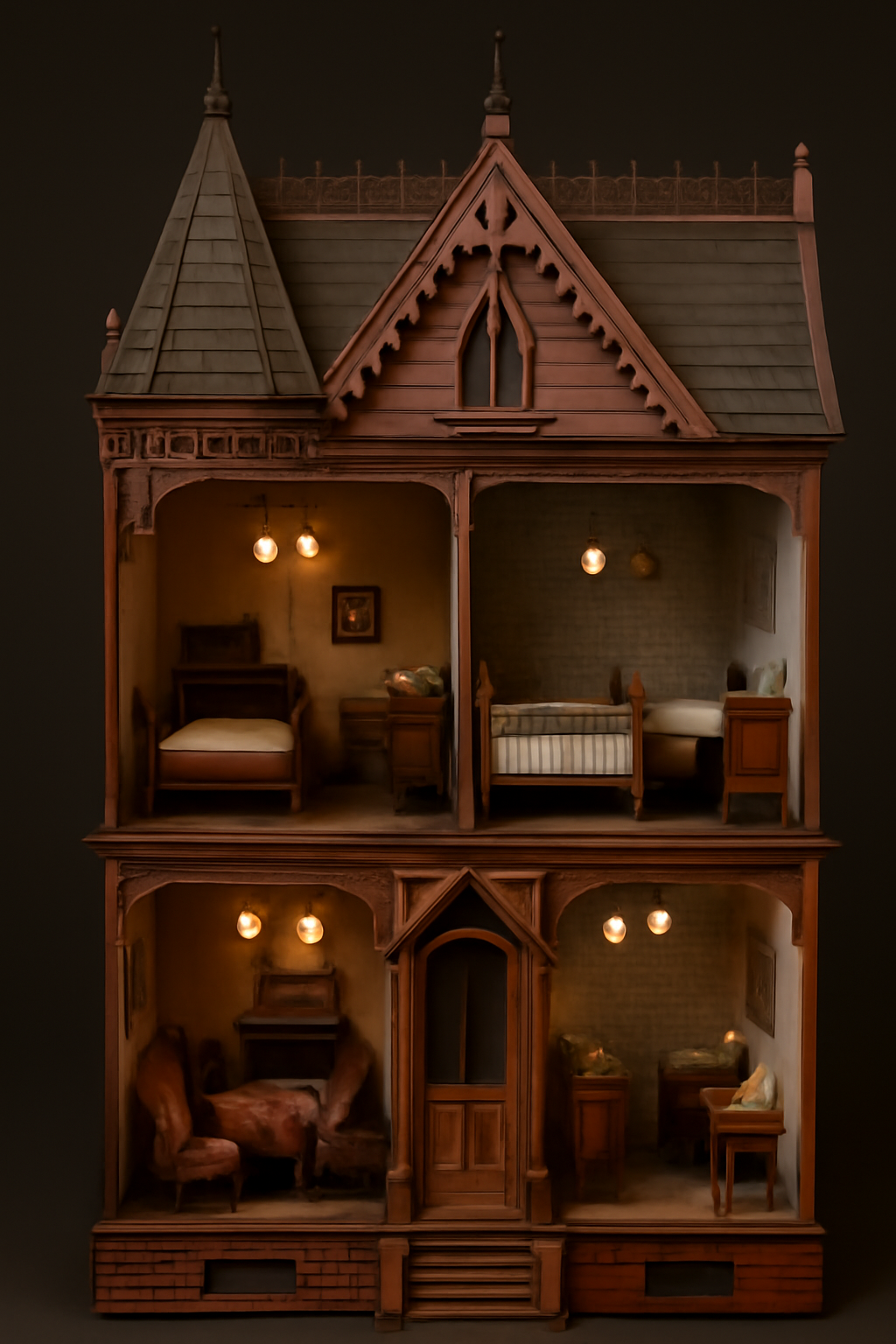
The Victorian era dollhouses featured unprecedented attention to detail, with rooms designated for specific purposes: drawing rooms, libraries, kitchens, nurseries, and servants' quarters. This mirrored the compartmentalized nature of Victorian homes and the strict social hierarchies of the era, similar to how fashion dolls of the period represented social status and style.
American Dollhouses Emerge
The history of dollhouses in America began to flourish in the mid-1800s. American manufacturers developed their own styles including brownstone townhouses reflecting New York architecture, colonial-style homes celebrating American heritage, and practical designs focusing on playability rather than pure display.
R. Bliss Manufacturing Company, founded in 1832 in Rhode Island, became America's premier dollhouse manufacturer, producing colorful lithographed paper-on-wood houses that were affordable for middle-class families. Their designs featured vibrant colors, printed architectural details, and sturdy construction that made them ideal children's toys.
Educational Purpose in the Victorian Era
Victorian dollhouses served important educational functions in the history of doll play and childhood development. Young girls learned household management, social etiquette and proper behavior, domestic skills like arranging furniture and organizing spaces, and understanding of social class structures through servant and master arrangements.
This educational aspect was taken seriously by parents and educators who viewed dollhouses as essential tools for preparing girls for their future roles as household managers and mothers.
Early 20th Century: Dollhouses for the Masses (1900-1950)
The Bliss Manufacturing Legacy
The early 1900s saw continued innovation from American manufacturers. Bliss Manufacturing Company remained dominant with their distinctive lithographed designs, while other companies emerged to meet growing demand. The pieces and collections from this era are now highly sought after by collectors.
German Dollhouse Dominance
German manufacturers continued to lead the world market in the history of dollhouses with companies like Christian Hacker producing high-quality wooden houses, Gottschalk creating elegant painted facades, and Rock & Graner offering elaborate mansion-style designs. These German dollhouses featured superior craftsmanship, realistic architectural details, and comprehensive furniture sets.
The Rise of Metal Dollhouses
The 1920s-1930s introduced metal dollhouses to the American market. Marx Toys and other manufacturers created sturdy tin lithographed houses that were virtually indestructible, affordable for working-class families, and featured colorful Art Deco designs. These metal houses represent an important chapter in dollhouse history, making miniature play accessible to millions of children.
Impact of World Wars
Both World Wars significantly impacted the history of dollhouses. During WWI (1914-1918), German imports to America ceased, spurring American dollhouse manufacturing growth. WWII (1939-1945) brought material shortages, leading to cardboard and composition materials, simplified designs, and renewed focus on American-made toys.
The post-war period saw a boom in dollhouse popularity as prosperity returned and baby boom children created massive toy market demand.
Mid-20th Century Modern Era (1950-1990)
Plastic Revolution
The 1950s brought revolutionary changes to the history of dollhouses with the introduction of plastic manufacturing. This transformation enabled mass production at unprecedented scales, bright colors and modern designs, modular systems allowing customization, and prices accessible to nearly all families.
Iconic Brands Emerge
Several manufacturers became household names during this period. Lundby of Sweden (founded 1947) created modernist Scandinavian designs with working lights and sophisticated furniture. Marx Toys produced affordable American plastic houses with traditional styling and comprehensive accessory sets.
Mattel entered the market with Barbie's Dream House in 1962, linking dollhouses to their fashion doll empire. This marked a shift toward dollhouses as backdrops for doll play rather than miniature homes in their own right.
Architectural Influence
The history of dollhouses in this era reflected contemporary architectural trends including mid-century modern designs with open floor plans, ranch-style houses popular in American suburbs, split-level homes, and futuristic space-age aesthetics in 1960s designs. These classic and modern interpretations showed how dollhouses continued to mirror real-world architectural evolution.
Collectible Movement Begins
The 1970s-1980s saw adults rediscovering dollhouses as serious hobbies. This led to formation of miniature collector clubs and organizations, emergence of artisan furniture makers, development of realistic 1:12 scale standards, and publications dedicated to miniature collecting. The history of doll collecting became intertwined with the dollhouse hobby, creating a vibrant adult collector community.
Contemporary Dollhouses (1990s-Present)
Diverse Styles and Markets
Modern dollhouse history reflects diverse consumer interests with high-end collector houses featuring museum-quality craftsmanship, playline dollhouses designed for active child play, DIY kit houses for hobbyists, and themed houses based on movies, TV shows, and pop culture. The origins of dollhouses as both art objects and toys continues in today's bifurcated market.
Technology Integration
21st-century dollhouses incorporate modern technologies including LED lighting systems, sound effects and music, smartphone app connectivity, and 3D-printed custom components. These innovations represent the latest chapter in the history of dollhouses, blending traditional miniature craftsmanship with cutting-edge technology.
Sustainability Focus
Contemporary manufacturers increasingly emphasize eco-friendly materials like FSC-certified wood, recycled plastics, non-toxic paints and finishes, and sustainable packaging. This reflects growing consumer demand for environmentally responsible toys and aligns with broader societal values.
Global Manufacturing
Today's dollhouse history includes truly global production with China as the primary manufacturing center, European companies focusing on premium markets, American artisans creating custom pieces, and online marketplaces connecting worldwide buyers and sellers. The pieces and collections available to today's enthusiasts span every era and style imaginable.
Modern Playline Innovations
Major toy companies continue innovating in dollhouse design. KidKraft produces large-scale wooden playhouses with contemporary styling. Calico Critters (Sylvanian Families) offers miniature animal families with detailed flocked figures and furniture. LOL Surprise dollhouses integrate the brand's collectible dolls with house playsets, representing the latest evolution in how popular dolls and dollhouses interconnect.

Famous Historic Dollhouses and Collections
Queen Mary's Dolls' House (1924)
Perhaps the most famous dollhouse in history, Queen Mary's Dolls' House at Windsor Castle represents the pinnacle of miniature craftsmanship. Designed by architect Sir Edwin Lutyens, this masterpiece features working elevators and plumbing, a library with 200 miniature books written by famous authors, paintings by renowned artists, real wine in the cellar bottles, and functioning electric lights throughout.
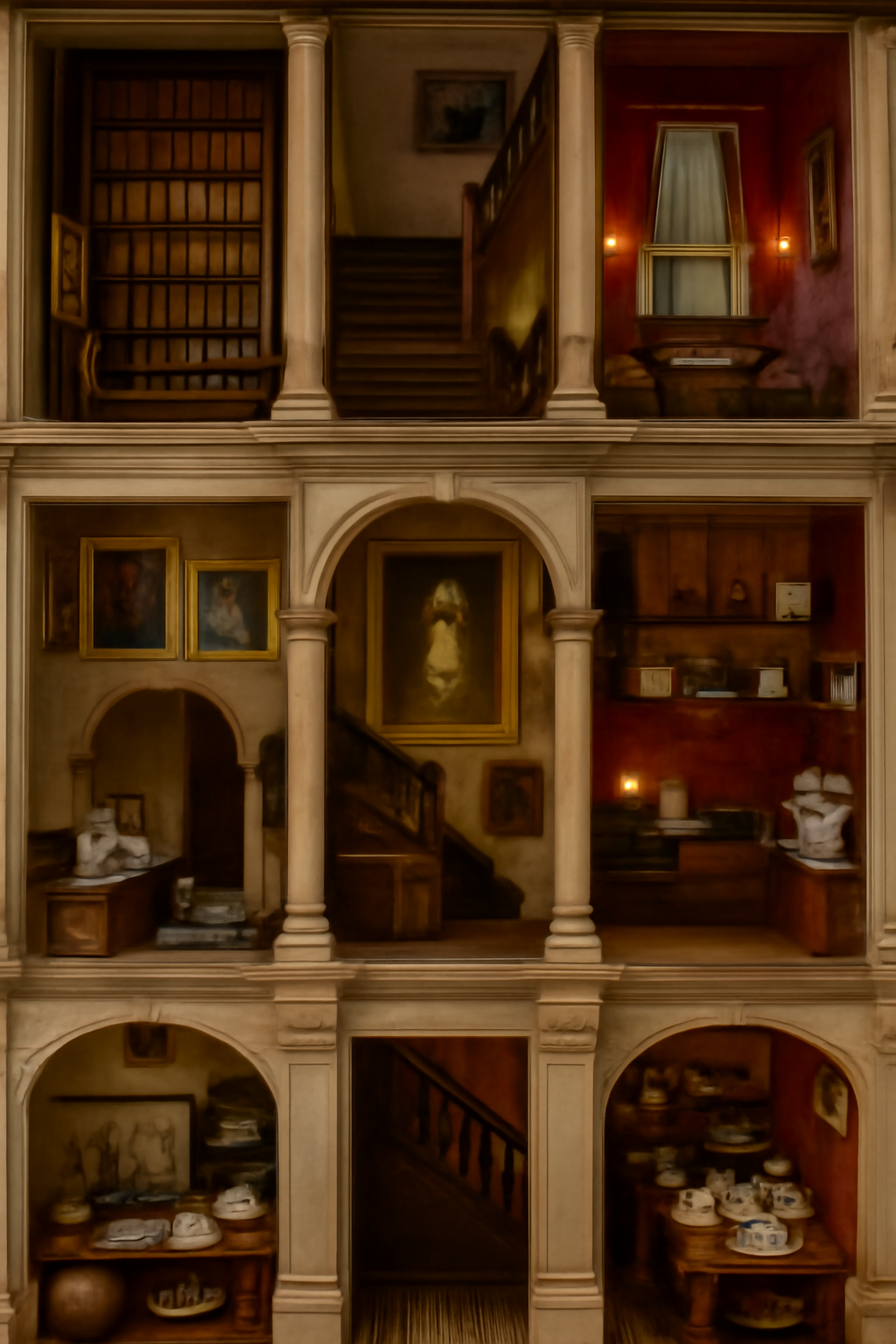
The history of this dollhouse reflects the collaborative effort of over 1,500 craftsmen, artists, and manufacturers who contributed to its creation as a gift to Queen Mary. It remains on permanent display, inspiring dollhouse enthusiasts worldwide.
Titania's Palace (1907-1922)
Created by Sir Nevile Wilkinson for his daughter, Titania's Palace is an Irish-made dollhouse representing a fairy palace. This extraordinary piece features 16 rooms with over 3,000 miniature objects, furniture made from rare woods inlaid with precious stones, walls decorated with silk and hand-painted scenes, and tiny working clocks and musical instruments. Currently housed in Denmark, it represents romantic Victorian fantasy translated into miniature form.
Colleen Moore's Fairy Castle (1928-1935)
Silent film star Colleen Moore's Fairy Castle, now at Chicago's Museum of Science and Industry, combines fantasy with luxury. Valued at approximately $7 million, it features furniture with real gems and precious metals, walls inlaid with pearls and emeralds, miniature artworks including a Cinderella story illustrated on grains of rice, and architectural elements from famous castles worldwide. This represents the glamour and excess of Hollywood's golden age translated into miniature form.
The Thorne Miniature Rooms (1930s-1940s)
Narcissa Niblack Thorne created 68 miniature rooms depicting historical interiors from the 13th to 20th centuries at 1-inch to 1-foot scale. These rooms, now split between the Art Institute of Chicago and the Phoenix Art Museum, serve as historical documents preserving interior design history. Each room is meticulously researched and crafted, representing specific periods and styles with scholarly accuracy.
The Stettheimer Dollhouse (1916-1935)
Artist Carrie Walter Stettheimer created this avant-garde dollhouse now at the Museum of the City of New York. Featuring modernist art gallery aesthetics, miniature artworks by famous artists including Marcel Duchamp and Alexander Archipenko, Art Deco furniture and design, and rooms representing an artistic intellectual's home. This represents how the history of dollhouses intersects with fine art and modernist movements.
Regional Dollhouse Traditions
German Dollhouse Heritage
Germany's contribution to dollhouse history remains unparalleled. The German toy manufacturing tradition produced high-quality wooden houses, elegant painted facades, and elaborate mansion-style designs. The origins of dollhouses as finely crafted objects owes much to German artisan traditions that continue influencing miniature makers worldwide.
British Dollhouse Tradition
British dollhouses evolved distinctively with Georgian and Victorian architectural styles, strong emphasis on historical accuracy, and companies like Lines Brothers (Tri-ang) becoming household names. The British doll manufacturing heritage influenced dollhouse design throughout the Commonwealth.
American Innovation
American dollhouse history emphasizes affordability, play value, mass production innovations, and linking dollhouses to popular culture and entertainment. From Bliss's lithographed houses to modern licensed products, American manufacturers democratized dollhouse ownership.
Japanese Dollhouses
Japan developed unique miniature traditions including traditional Japanese houses with tatami rooms and shoji screens, modern urban apartment-style houses, and influence from anime and manga culture. Japanese precision craftsmanship brought new standards to miniature furniture and accessories, complementing their rich tradition of Japanese dolls and figures.
Dollhouse Scales and Standardization
The 1:12 Scale Standard
The history of dollhouses includes important technical developments. The 1:12 scale (1 inch = 1 foot) became the international standard for collector dollhouses by the mid-20th century. This standardization enabled interchangeable furniture and accessories from different manufacturers, comprehensive catalogues of compatible items, and realistic proportions that satisfied adult collectors.
Alternative Scales
Other scales serve different purposes in dollhouse history including 1:24 scale (half-inch scale) for smaller spaces, 1:48 scale (quarter-inch scale) for large house projects, and 1:6 scale (playscale) for fashion dolls like Barbie. Each scale has its own collector community and manufacturers specializing in that size.
Collecting Antique Dollhouses
Value Factors
The history of doll collecting intersects with dollhouse collecting, with values determined by age and provenance, original condition versus restoration, manufacturer and rarity, completeness of original furnishings, and historical significance. Pieces and collections from famous makers like Bliss, German manufacturers, or unique custom houses command premium prices.
Authentication Challenges
Collectors face challenges identifying authentic antique dollhouses including distinguishing reproductions from originals, identifying manufacturer marks and signatures, understanding period-appropriate materials and construction, and verifying provenance and ownership history. Museums and collector organizations provide resources for authentication.
Preservation Concerns
Maintaining historic dollhouses requires understanding period materials and aging processes, appropriate cleaning and stabilization methods, environmental controls for temperature and humidity, and documentation through photography and records. The history of dollhouses is preserved through careful stewardship by collectors and institutions.
Dollhouse Architecture Through the Centuries
Dollhouse Architecture Through the Centuries
Dollhouses document architectural history including Tudor and Elizabethan designs, Georgian symmetry and proportion, Victorian Gothic and Queen Anne styles, Arts and Crafts movement influence, Art Deco and Moderne styles, and Mid-century modern and contemporary designs. The origins of dollhouses as miniature architecture makes them valuable teaching tools for understanding design history, much like how fashion dolls document costume and style evolution.
Regional Architectural Influences
Different regions contributed distinctive styles to dollhouse history. New England colonial styles, Victorian San Francisco row houses, Southern plantation homes, European castle and manor designs, and Asian temple and traditional house styles all found expression in miniature form.
The Educational Role of Dollhouses
Historical Learning Tool
Throughout the history of dollhouses, they've served educational purposes by teaching social history through room arrangements and servant quarters, documenting domestic technology evolution from candlelight to electricity, showing changing gender roles through play scenarios, and preserving craft traditions in miniature form.
Modern Educational Applications
Contemporary educators use dollhouses for spatial reasoning development, narrative and storytelling skills, fine motor skill development, understanding of scale and proportion, and social-emotional learning through role play. The history of doll play demonstrates consistent educational value across centuries.
Dollhouse Furniture and Accessories
Furniture Manufacturing History
The history of dollhouses includes specialized furniture makers. German manufacturers created composition furniture, British companies produced detailed metal pieces, American makers offered affordable wooden sets, and contemporary artisans craft museum-quality miniatures.
Specialty Miniatures
Collector-grade dollhouses feature specialized items including porcelain dolls as house residents, miniature versions of famous dolls like Barbie, or teddy bears. These pieces and collections add character and authenticity to miniature homes.
Dollhouses in Popular Culture
Media Representation
The history of dollhouses includes significant cultural impact through literature like "The Dollhouse" and "A Doll's House" by Henrik Ibsen, films featuring dollhouses as plot elements, television shows depicting dollhouse collectors, and social media communities sharing creations and restorations. Dollhouses serve as powerful metaphors for control, domestic life, and childhood nostalgia, similar to how famous dolls throughout history have captured cultural imagination.
Celebrity Collectors
Notable figures have embraced dollhouse collecting including Queen Mary of England, actress Colleen Moore, Oprah Winfrey's childhood dollhouse stories, and contemporary celebrities sharing collections on social media. This visibility elevates dollhouses from children's toys to respected art forms.
The Future of Dollhouses
Emerging Trends
The future of dollhouse history includes augmented reality integration allowing virtual furniture placement, 3D printing enabling custom components and pieces, sustainable materials and eco-conscious design, diverse representation in dollhouse families and scenarios, and smart home miniatures with working technology.
Collector Demographics
The dollhouse hobby is evolving with increased male collectors breaking gender stereotypes, younger collectors entering through social media inspiration, diverse global collector communities, and intergenerational hobby participation. The origins of dollhouses as exclusively female pursuits has given way to inclusive hobby communities.
Preservation Efforts
Museums and institutions ensure the history of dollhouses remains accessible through digital archives and virtual tours, conservation science applications, educational programming, and collaborative research projects. Major collections at the Victoria and Albert Museum, Strong National Museum of Play, and dozens of specialized institutions preserve this heritage.
Frequently Asked Questions About Dollhouse History
When were dollhouses invented?
Miniature houses existed in ancient Egypt (3000 BCE), but dollhouses as we know them were invented in 16th-century Germany and the Netherlands (1500s-1600s). Wealthy families commissioned elaborate "baby houses" as status symbols and educational tools. The first documented baby house dates to 1558 in Bavaria, Germany.
What is the oldest dollhouse in the world?
The oldest surviving dollhouse is likely the Nuremberg Dollhouse from around 1558, housed in the Germanic National Museum in Nuremberg, Germany. However, Petronella Oortman's Dutch cabinet house (1686-1710) is the most famous and valuable early dollhouse, worth approximately €1 million today.
Why were dollhouses originally created?
The origins of dollhouses served multiple purposes: displaying family wealth and status, teaching daughters household management skills, showcasing craftsmanship and artistic taste, documenting lifestyle and possessions, and serving as conversation pieces for guests. They were rarely played with by children initially.
What is the most expensive dollhouse ever made?
Astolat Dollhouse Castle, valued at $8.5 million, is the most expensive dollhouse. Created over 13 years by artist Elaine Diehl, it features 29 rooms, real gold and silver leaf, miniature artworks, and furniture made from rare materials. Queen Mary's Dolls' House (1924) is worth approximately $6-8 million but is priceless due to historical significance.
What scale are traditional dollhouses?
The standard dollhouse scale is 1:12, meaning 1 inch equals 1 foot in real life. This became the international standard in the mid-20th century. Other scales include 1:24 (half-inch scale), 1:48 (quarter-inch scale), and 1:6 (playscale for fashion dolls).
How did Victorian dollhouses differ from earlier versions?
Victorian dollhouses (1837-1901) featured multiple stories (2-4 floors), servants' quarters reflecting social hierarchy, elaborate architectural details, mass-produced affordability, wallpapered and carpeted rooms, miniature gas lighting fixtures, and designated rooms for specific purposes. They became toys rather than solely display pieces.
What materials were antique dollhouses made from?
Historic dollhouses used wood (primary structure), tin and pewter (furniture and accessories), paper (lithographed decorations), fabric (curtains, carpets, upholstery), glass (windows, mirrors), porcelain and ceramic (dishes, decorative items), and precious metals (silver, gold in wealthy houses).
Are old dollhouses valuable?
Antique dollhouse values range from $200-$50,000+ depending on age, manufacturer, condition, completeness, and rarity. Bliss Manufacturing houses ($300-$3,000), German antique houses ($500-$10,000), rare baby houses ($10,000-$50,000+), and custom commissioned pieces (highly variable) all command different prices.
What is the difference between a dollhouse and a baby house?
"Baby house" refers to 17th-18th century European cabinet-style dollhouses designed for adult women, not children. They were display pieces showcasing wealth and taste. "Dollhouse" is the modern term for miniature houses intended for children's play, though collectors use both terms interchangeably.
Who was the Bliss Manufacturing Company?
R. Bliss Manufacturing Company (1832-1914) was America's premier dollhouse manufacturer based in Rhode Island. They revolutionized dollhouses with colorful lithographed paper-on-wood construction, affordable prices for middle-class families, sturdy designs for children's play, and distinctively American architectural styles. Their houses are highly collectible today.
Conclusion: The Enduring Legacy of Dollhouses
The history of dollhouses spans millennia, evolving from ancient burial objects to Renaissance status symbols, Victorian educational tools, and today's diverse market of play toys and collector pieces. These miniature homes document architectural history, social customs, craft traditions, and changing attitudes toward childhood and play.
The origins of dollhouses in wealthy European households have democratized to worldwide accessibility, while maintaining traditions of fine craftsmanship in collector markets. Whether antique German baby houses, Victorian mansions, mid-century modern plastic homes, or contemporary custom creations, dollhouses continue captivating people across all ages and cultures.
Museums preserve important historic dollhouses while new generations discover the joy of miniature worlds through play and collecting. The pieces and collections created today will become tomorrow's historic artifacts, continuing the rich tradition documented in this guide.
From ancient Egypt to the digital age, the history of dollhouses reflects humanity's enduring fascination with recreating life in miniature form—a tradition that shows no signs of ending.